GU Interior Design
1. Congratulations on winning the Rome Design Awards! Can you introduce yourself and share about what inspired you to pursue design as a career?
Thank you. Our background began in landscape design, which later expanded naturally into interior design. This shift allowed us to bring a macro, environmental perspective into the more intimate scale of interior spaces.
Our inspiration has always stemmed from the desire to create environments that feel thoughtful, comfortable, and attuned to human living. For us, design is not merely a profession—it is a calling to elevate everyday life through creative problem-solving.
2. What does being recognised in the Rome Design Awards mean to you?
At GU Interior Design, we believe in “silent cultivation”—steadily refining our craft and bringing a unique perspective to every project. Receiving the Rome Design Award is a profound affirmation of our efforts, strengthening our resolve to continue pushing boundaries and pursuing excellence.
3. How has this achievement impacted your career, team, or agency, and what opportunities has it brought so far?
The award has greatly encouraged our team and validated our creative direction. We aim to use this recognition to strengthen trust with existing clients and showcase our capabilities to potential partners. It marks a key milestone in aligning us with international design standards.
4. What role does experimentation play in your creative process? Can you share an example?
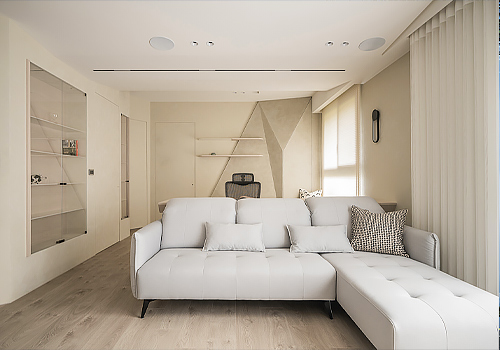
Experimentation is essential to our growth. In this awarded project, we employed folded-plate structures to echo the geometry of mountains. Achieving the precise origami-like lines demanded complex craftsmanship.
We are grateful that the client embraced this approach, allowing us to challenge traditional construction methods and bring a sense of geometric landscape into the home.
5. What's the most unusual source of inspiration you've ever drawn from for a project?
Surprisingly, the inspiration came from a mountain bike the client had not yet purchased. Their passion for sports led us to visualise the slopes and ridges of mountainous terrain, which became the conceptual foundation of the origami-like geometry defining the residence.
6. What’s one thing you wish more people understood about the design process?
Design is not a monologue; it is a dialogue. Meaningful communication and mutual empathy between designer and client are essential to creating spaces that genuinely reflect the user’s lifestyle.
7. How do you navigate the balance between meeting client expectations and staying true to your ideas?
We begin with the clients’ functional needs and provide professional assessments of feasibility and value. Within the space where clients grant creative freedom, we introduce artistic elements and unique details that elevate the overall design.
8. What were the challenges you faced while working on your award-winning design, and how did you overcome them?
The precision required exceeded our initial expectations. We persisted through continuous site reviews and eliminated any sample or detail that did not meet the standard. This persistence allowed the project to achieve a refined and fully realised execution.
9. How do you recharge your creativity when you hit a creative block?
We travel. Stepping into the unfamiliar broadens our perspective and enriches the reservoir of inspiration we draw upon in our work.
10. What personal values or experiences do you infuse into your designs?
Life moves through rises and falls. We conveyed this through sloped ceiling forms that conceal beams—a functional gesture layered with metaphor, reflecting the client’s transition into a new chapter of life.
11. What is an advice that you would you give to aspiring designers aiming for success?
We stay professional, remain optimistic, and embrace self-reflection. The most valuable learning often comes from refining ourselves through mistakes.
12. If you could collaborate with any designer, past or present, who would it be and why?
Carlo Scarpa. His mastery of materials, composition, and light has influenced us since our university days. His work carries a poetic mystery that resonates deeply with us.
13. What's one question you wish people would ask you about your work, and what's your answer?
We hope people ask, “From what perspective does this work originate?”—our answer: life’s twists and ascents inspire the spaces we create, embracing those rhythms and offering sanctuary for the spirit.