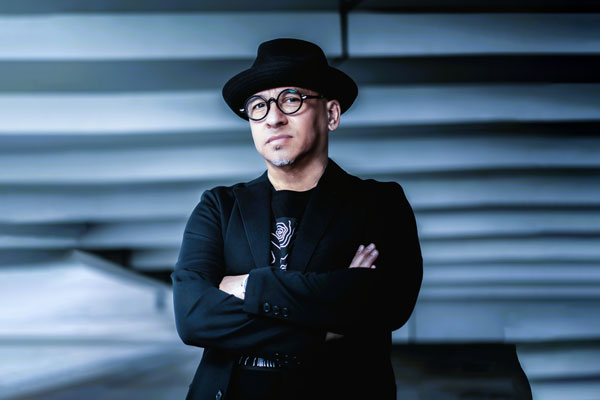
Paulo Duarte Gomes de Senna Fernandes
1. Congratulations on winning the Rome Design Awards! Can you introduce yourself and share about what inspired you to pursue design as a career?
Following my recent award, I have been reflecting on the journey that first inspired me to pursue a career in design—a path rooted in my inspiration from high-fashion artistry.
2. What does being recognised in the Rome Design Awards mean to you?
Receiving an award from the Rome Design Awards is an incredible honour. For me, Rome represents the pinnacle of timeless elegance; being recognised here connects my modern creative vision to a legacy of classical artistry.
This achievement reminds me why I first chose this path: to create pieces that speak a universal language of beauty.
3. How has this achievement impacted your career, team, or agency, and what opportunities has it brought so far?
Recognition through this award often opens doors to collaborations with European suppliers, high-end textile houses, and luxury hospitality brands seeking award-winning design talent.
4. What role does experimentation play in your creative process? Can you share an example?
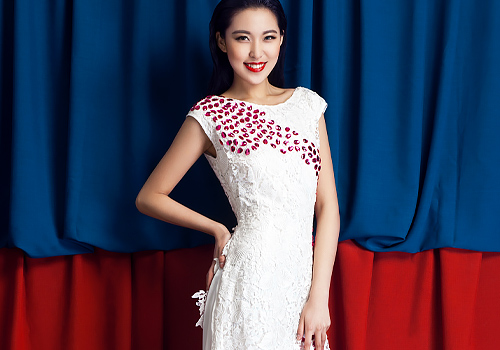
The experimentation phase involved months of working with specialized textiles. I didn't want to simply use silk—I wanted to understand how it responded when layered with laser-cut structural elements.
We developed multiple prototypes, refining the fabric weight and embroidery tension to ensure the garment moved like a living sculpture rather than simply functioning as a dress.
5. What's the most unusual source of inspiration you've ever drawn from for a project?
One of my most unusual sources of inspiration was a collection of historical records documenting the elite social circles of 19th-century Macau. I became fascinated by the "invisible architecture" of their social interactions.
That fascination inspired a collection in which the garment structures reflect the rigid yet elegant social hierarchies of the era, blending the weight of history with the lightness of modern silk.
6. What’s one thing you wish more people understood about the design process?
I wish more people understood that high fashion is as much about mathematics and structural engineering as it is about aesthetics. Every drape and fold is a calculated decision.
Behind an award-winning piece are hundreds of hours of technical prototyping to ensure that a garment is not only beautiful, but also a masterpiece of balance and precision.
7. How do you navigate the balance between meeting client expectations and staying true to your ideas?
I hear your desire for elegance. By introducing this structural innovation, we are not simply creating a dress—we are creating an award-winning piece of wearable art.
8. What were the challenges you faced while working on your award-winning design, and how did you overcome them?
High fashion often demands silhouettes that defy gravity or fabrics that are exceptionally challenging to manipulate. For an award-winning piece, every detail of the craftsmanship must withstand the scrutiny of an international jury.
9. How do you recharge your creativity when you hit a creative block?
Creativity often returns when I shift my focus from the product to the purpose. Reflecting on the "Made in Macau" identity and the legacy I hope to leave for my son brings a renewed sense of clarity.
It reminds me that the work is bigger than a single design—it's a lasting contribution to our cultural heritage.
10. What personal values or experiences do you infuse into your designs?
I infuse every piece with a sense of territorial pride. Through my international recognition, I aim to demonstrate that local craftsmanship can meet the exacting standards of European haute couture, serving as a cultural ambassador through design.
11. What is an advice that you would you give to aspiring designers aiming for success?
Success in design is a marathon of patience and precision. My greatest advice is to honor your ancestors through your work while building a future that is entirely your own. Be a student of history, a master of technique, and an ambassador for your culture.
12. If you could collaborate with any designer, past or present, who would it be and why?
If I could collaborate with anyone, it would be Gianfranco Ferré. As someone who valued the "invisible architecture" of a garment, a collaboration with Ferré would be a meeting of technical minds.
Together, we could create a collection that blends Ferré's sculptural white shirts and architectural silhouettes with my research into the elite social circles of 19th-century Macau, using precision and craftsmanship to tell a story of global heritage.
13. What's one question you wish people would ask you about your work, and what's your answer?
When I design, I am, in many ways, preserving my family's legacy through a modern medium. The structural choices I make often pay tribute to the social hierarchies and values of that era.
I'm not simply creating a luxury garment; I'm ensuring that the "Made in Macau" identity is more than a label of origin—it is a living expression of a heritage rooted in excellence, culture, and international exchange. The fabric is the messenger, but history is the soul.