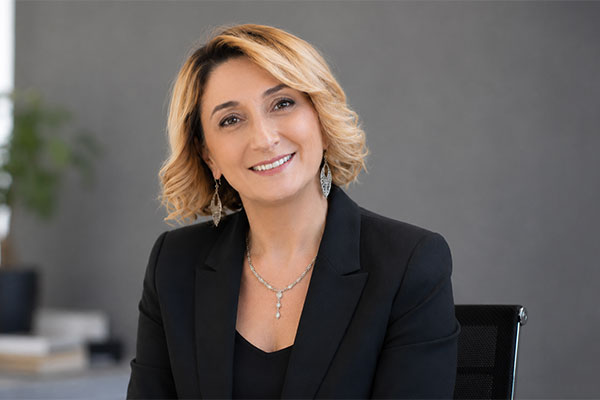
Darejan Shatashvili
1. Congratulations on winning the Rome Design Awards! Can you introduce yourself and share about what inspired you to pursue design as a career?
Thank you very much. My name is Darejan Shatashvili, and I am an architect and designer from Georgia. Design has fascinated me since childhood because it allows us to transform ideas into spaces that shape people's lives and emotions. I have always been inspired by the relationship between architecture, culture, and nature, as well as the ability of thoughtfully designed spaces to create memorable experiences.
Throughout my career, I have focused on creating projects that combine contemporary design with local identity and cultural heritage. I believe architecture should not only serve practical needs but also tell a story and foster a meaningful connection with its surroundings.
The inspiration behind my work often comes from observing how people interact with spaces, as well as from the unique history, traditions, and landscapes of Georgia. These influences encourage me to create designs that are both innovative and deeply rooted in their context.
Winning the Rome Design Awards is a great honour, and it motivates me to continue exploring new ideas and pushing the boundaries of architectural design.
2. What does being recognised in the Rome Design Awards mean to you?
Being recognised in the Rome Design Awards is a tremendous honour and a meaningful milestone in my professional journey. It is especially rewarding because the award celebrates creativity, innovation, and design excellence on an international stage.
For me, this recognition is not only an acknowledgement of a single project but also a validation of the dedication, research, and passion invested in every stage of the design process. It demonstrates how architecture can successfully connect local culture and identity with contemporary global design values.
This achievement is particularly significant because it brings international recognition to Georgian architecture and the rich cultural heritage that inspires many of my projects. It encourages me to continue creating meaningful spaces that respect their context while offering fresh perspectives and memorable experiences.
3. How has this achievement impacted your career, team, or agency, and what opportunities has it brought so far?
Receiving recognition from the Rome Design Awards has had a profoundly positive impact on both my professional career and our team. It has strengthened our confidence in our design approach and reaffirmed our commitment to creating architecture that brings together innovation, functionality, and cultural identity.
For our practice, this achievement has enhanced our international visibility and credibility, allowing our work to reach a broader audience of clients, industry professionals, and organisations. It has generated new interest in our projects and opened opportunities for collaborations beyond our local market. More importantly, it has been a meaningful source of motivation for our team, recognising the creativity, dedication, and collective effort behind every project.
This international recognition inspires us to continue pursuing ambitious work while maintaining the highest standards of design. Most importantly, it has given us the opportunity to share our vision and showcase Georgian architecture on a global stage.
We hope this recognition will lead to new partnerships, participation in international design initiatives, and future projects that continue exploring the relationship between contemporary architecture and cultural heritage.
4. What role does experimentation play in your creative process? Can you share an example?
Experimentation plays a central role in my creative process. I believe meaningful design emerges when we challenge conventional solutions and explore new ways of interpreting space, form, materials, and cultural narratives. Every project begins with research and analysis, but it is through experimentation that ideas evolve into distinctive architectural concepts.
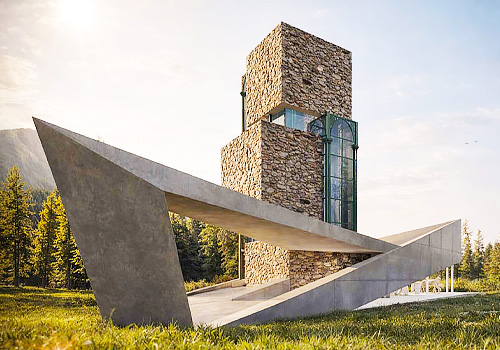
One example is the Wedding House in Mestia, a project inspired by the historic Svan towers of Georgia's mountain region. Rather than replicating traditional architecture, I explored how the symbolic qualities of the Svan tower could be reinterpreted through a contemporary architectural language. Through a series of design studies, I experimented with proportions, spatial organisation, and the relationship between solid, stone-like volumes and transparent elements.
The result is a design that respects the region's cultural heritage while expressing a contemporary architectural identity. The building serves not only as a venue for wedding ceremonies but also as a landmark and viewing point overlooking the spectacular Caucasus Mountains.
This project reflects my broader design philosophy: using experimentation to bridge tradition and innovation, creating spaces that are both culturally meaningful and relevant to contemporary life.
5. What's the most unusual source of inspiration you've ever drawn from for a project?
One of the most unusual sources of inspiration for my work has been human movement and body language. Rather than looking solely to buildings, natural forms, or historical references, I have explored how the human body expresses motion, balance, and emotion through posture and silhouette.
One conceptual high-rise project was inspired by the dynamics of the human figure, translating movement into architectural form. The changing positions of the body informed the building's geometry, creating a structure that appears to twist, shift, and evolve as it rises. This approach allowed the architecture to convey a sense of energy and movement rather than appearing as a static object.
I find this source of inspiration particularly compelling because architecture ultimately exists for people. By drawing from human movement, I aim to create spaces and forms that feel more expressive, emotional, and connected to the human experience.
This experience reinforced an important lesson: inspiration often comes from unexpected places. Some of the most innovative architectural ideas emerge when we look beyond architecture itself and observe the patterns, behaviours, and movements that shape everyday life.
6. What’s one thing you wish more people understood about the design process?
One thing I wish more people understood is that design is far more than creating something visually attractive. Successful design is the result of extensive research, analysis, problem-solving, and countless decisions that balance functionality, aesthetics, context, budget, sustainability, and user experience.
Many people see only the final outcome, but behind every project is a thoughtful process of exploration, refinement, and collaboration. Designers test multiple ideas, revisit concepts, and carefully consider how a space will be experienced by the people who use it every day.
I also believe good design is not about imposing a personal vision. It is about listening—to the site, the culture, the environment, and the people for whom the project is created. The most meaningful designs emerge when creativity is guided by empathy and a deep understanding of context.
Ultimately, design is about transforming challenges into opportunities. What appears simple and effortless is often the result of careful thought, experimentation, and dedication behind the scenes.
7. How do you navigate the balance between meeting client expectations and staying true to your ideas?
I see architecture and design as a collaborative process rather than a compromise between opposing viewpoints. My first priority is to understand the client's goals, values, and vision, because every successful project should respond to the needs of the people it is created for.
At the same time, I believe it is my responsibility as a designer to bring expertise, creativity, and a broader perspective to every conversation. The right balance is achieved through communication and trust. I listen carefully to the client's expectations and translate them into design solutions that are both practical and meaningful.
When presenting ideas, I always explain the thinking behind them—how they improve functionality, strengthen the project's identity, or create a better experience for users. If a client's initial request may not offer the strongest solution, I present thoughtful alternatives supported by sketches, visualisations, and open discussion. Rather than insisting on my own ideas, I focus on achieving the best possible outcome for the project.
Ultimately, my goal is to create designs that reflect the client's aspirations while maintaining architectural integrity and a clear design vision. The most successful projects are those where both the client and the designer contribute to a shared vision, creating something neither could have achieved alone.
8. What were the challenges you faced while working on your award-winning design, and how did you overcome them?
One of the greatest challenges in developing the Wedding House in Mestia was finding the right balance between honouring the region's cultural heritage and creating a contemporary architectural expression. Mestia and the Upper Svaneti region possess a distinctive architectural identity, best represented by the historic Svan towers. The challenge was to respect this heritage while establishing a modern architectural language that responds to the needs of today.
An equally important aspect of the project was responding to the client's vision and aspirations. In Georgia, the House of Justice is recognised for its citizen-centred approach to public service and its commitment to innovation. Projects of this scale are made possible through the professionalism, dedication, and forward-thinking leadership of its team.
Throughout the design and coordination process, the client's involvement was invaluable. This project was not created by the architect alone but through genuine collaboration. By carefully listening to the client's ideas and expectations, I was able to translate them into architectural solutions that reflected our shared vision. I firmly believe the strongest projects emerge when architects and clients work together with mutual trust and a common purpose.
I would also like to express my sincere appreciation to the Chairman of the House of Justice, his deputies, and the entire team. Their vision, commitment to innovation, and dedication to excellence in public service played a significant role in shaping this project. Their trust and collaboration inspired many of the key design decisions and were instrumental in achieving the final outcome.
The final design emerged through a dialogue between cultural heritage, public vision, and contemporary architecture. By combining local identity with modern design principles, we created a project that is both deeply rooted in its context and forward-looking in its aspirations.
In many ways, this recognition belongs not only to me as the architect, but also to everyone who contributed to bringing this shared vision to life.
9. How do you recharge your creativity when you hit a creative block?
Creative blocks are a natural part of the design process, and over the years I have learned that the best way to overcome them is not to force creativity, but to create the conditions for it to return naturally.
I also find it helpful to revisit the essence of a project—its purpose, location, cultural context, and the people it is designed for. Returning to these fundamentals often reveals opportunities that may have been overlooked during the creative process.
Sketching by hand is another essential part of my approach. Unlike digital workflows, hand sketches allow ideas to develop more freely and intuitively. Many of my concepts begin as simple sketches before evolving into fully realised architectural solutions.
Most importantly, I believe creativity thrives on curiosity. Whenever I encounter a creative block, I approach the challenge from a different perspective and remain open to unexpected sources of inspiration. More often than not, what initially feels like an obstacle becomes an opportunity to create a stronger and more meaningful design solution.
10. What personal values or experiences do you infuse into your designs?
Every project I design is guided by a set of personal values that have shaped both my professional and personal life. Among the most important are respect for cultural heritage, social responsibility, authenticity, and the belief that architecture should have a positive impact on people's lives.
Growing up and working in Georgia has given me a deep appreciation for the relationship between architecture, history, and identity. Our country possesses a rich cultural heritage and remarkable landscapes, which continue to influence my work. I strive to create designs that respect their context while presenting a contemporary vision for the future.
Another value that strongly shapes my approach is collaboration. Throughout my career, I have learned that successful architecture is never the result of one person's efforts alone. The best projects emerge when architects, clients, engineers, public institutions, and communities work together towards a shared vision. This belief was especially evident in the development of the Wedding House in Mestia, where close collaboration with the client and stakeholders played a vital role in shaping the final design.
I am also guided by a strong sense of public responsibility. I believe architecture should serve people, enhance everyday experiences, and contribute to the long-term development of cities and communities. Whether designing a public building, a cultural project, or a private development, I aim to create spaces that are meaningful, functional, and enduring.
Ultimately, I strive to bring a balance of innovation and respect to every project—embracing new ideas and technologies while honouring the people, culture, and environment that give each place its unique character.
11. What is an advice that you would you give to aspiring designers aiming for success?
My advice to aspiring designers is to remain curious, patient, and committed to continuous learning. Design is a profession that demands not only creativity but also discipline, resilience, and a genuine desire to understand people and the world around you.
First, don't be afraid to develop your own perspective. Trends come and go, but authentic ideas and a clear design philosophy will always endure. Take time to explore architecture, art, history, culture, technology, and nature, as inspiration often comes from the most unexpected places.
Second, embrace challenges and constructive criticism. Every project presents obstacles, and not every idea will succeed on the first attempt. The ability to learn from setbacks, adapt, and continue growing is one of the most valuable qualities a designer can possess.
I would also encourage young designers to listen carefully—to clients, users, colleagues, and the context of every project. Great design is never created in isolation. It grows from understanding needs, solving problems, and transforming ideas into meaningful experiences.
Most importantly, remember that success is not measured solely by awards or recognition. True success lies in creating work that positively impacts people's lives and contributes something meaningful to society. If you remain passionate about your craft, work with integrity, and never stop learning, professional recognition will follow naturally.
Finally, never underestimate the value of collaboration. The strongest projects are often the result of talented teams working towards a shared vision. Respect the expertise of others, remain open to new ideas, and strive to create architecture that leaves a lasting, positive legacy.
12. If you could collaborate with any designer, past or present, who would it be and why?
If I could collaborate with any designer, past or present, I would choose Frank Gehry. As one of the most influential architects of our time, he has redefined architectural form while challenging conventional approaches to design. His work demonstrates how architecture can be both a functional space and a powerful artistic expression.
What inspires me most about Gehry is his willingness to experiment. Throughout his career, he has continually pushed the boundaries of architecture, transforming complex ideas into iconic buildings that are instantly recognisable while remaining deeply connected to their purpose and context. Projects such as the Guggenheim Museum Bilbao demonstrate how architecture can revitalise an entire city and become a catalyst for cultural and economic development.
I would value the opportunity to collaborate with him because we share a passion for creating architecture that leaves a lasting impression while serving the people who experience it. While Gehry is celebrated for his sculptural and expressive forms, my own work focuses on connecting contemporary design with cultural heritage and local identity. I believe such a collaboration would create a meaningful dialogue between innovation, artistic freedom, and contextual sensitivity.
Beyond his remarkable buildings, I admire Gehry's determination to challenge convention and explore new possibilities throughout his career. His work reminds us that architecture should never be constrained by tradition alone and that creativity often emerges when we are willing to take risks.
Collaborating with Frank Gehry would be an extraordinary opportunity to learn from one of the world's most innovative architectural minds and further explore how architecture can inspire, surprise, and enrich people's lives.
13. What's one question you wish people would ask you about your work, and what's your answer?
One question I wish people would ask more often is, "What impact do you hope your architecture will have on future generations?" and my answer would be that I hope my work contributes to creating places that remain meaningful long after they are built. While architecture must respond to present-day needs, I believe its true value lies in how it serves people over time and becomes part of a community's identity.
I do not see architecture simply as the creation of buildings. I see it as the creation of experiences, memories, and opportunities for people. The most successful projects continue to inspire, function effectively, and contribute positively to their surroundings for decades.
This philosophy was especially important in the design of the Wedding House in Mestia. My goal was not only to create a venue for wedding ceremonies but also a landmark that reflects the spirit of the region, celebrates its cultural heritage, and becomes a meaningful place for both residents and visitors. I hope it will be a place where future generations create lasting memories and strengthen their connection to the unique identity of Upper Svaneti.
Ultimately, I believe architecture carries a responsibility that extends beyond aesthetics and functionality. It has the power to shape communities, preserve cultural values, and improve people's quality of life. If my work can make a lasting, positive contribution to society, I would consider that my greatest achievement.