2025 Winner
AM ADVOGADOS NEW OFFICES
Entrant
Luciano Dalla Marta Architecture
Category
Interior Design - Office
Client's Name
Andrade Maia Advogados
Country / Region
Brazil
Gallery
About The Entry
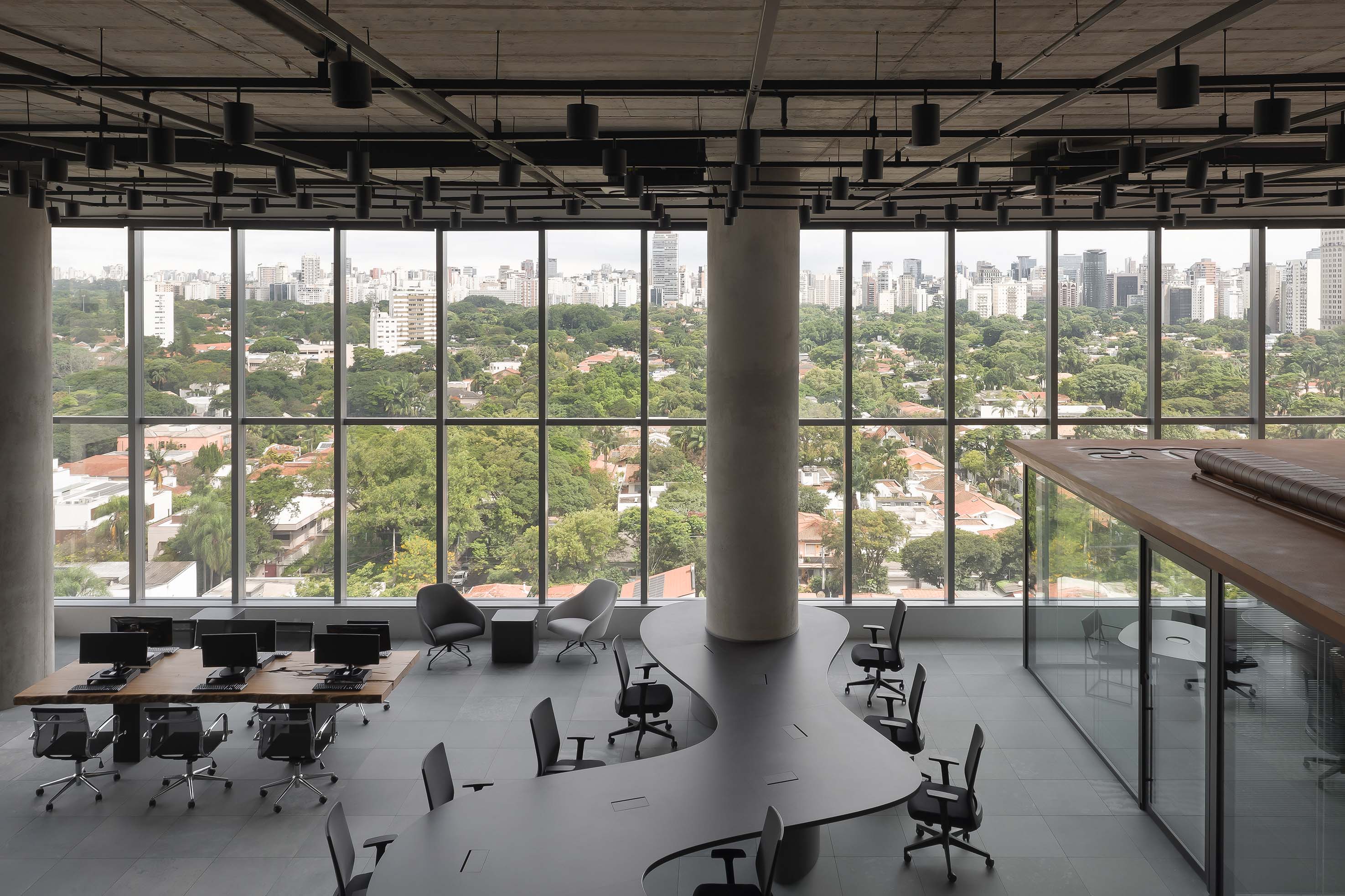
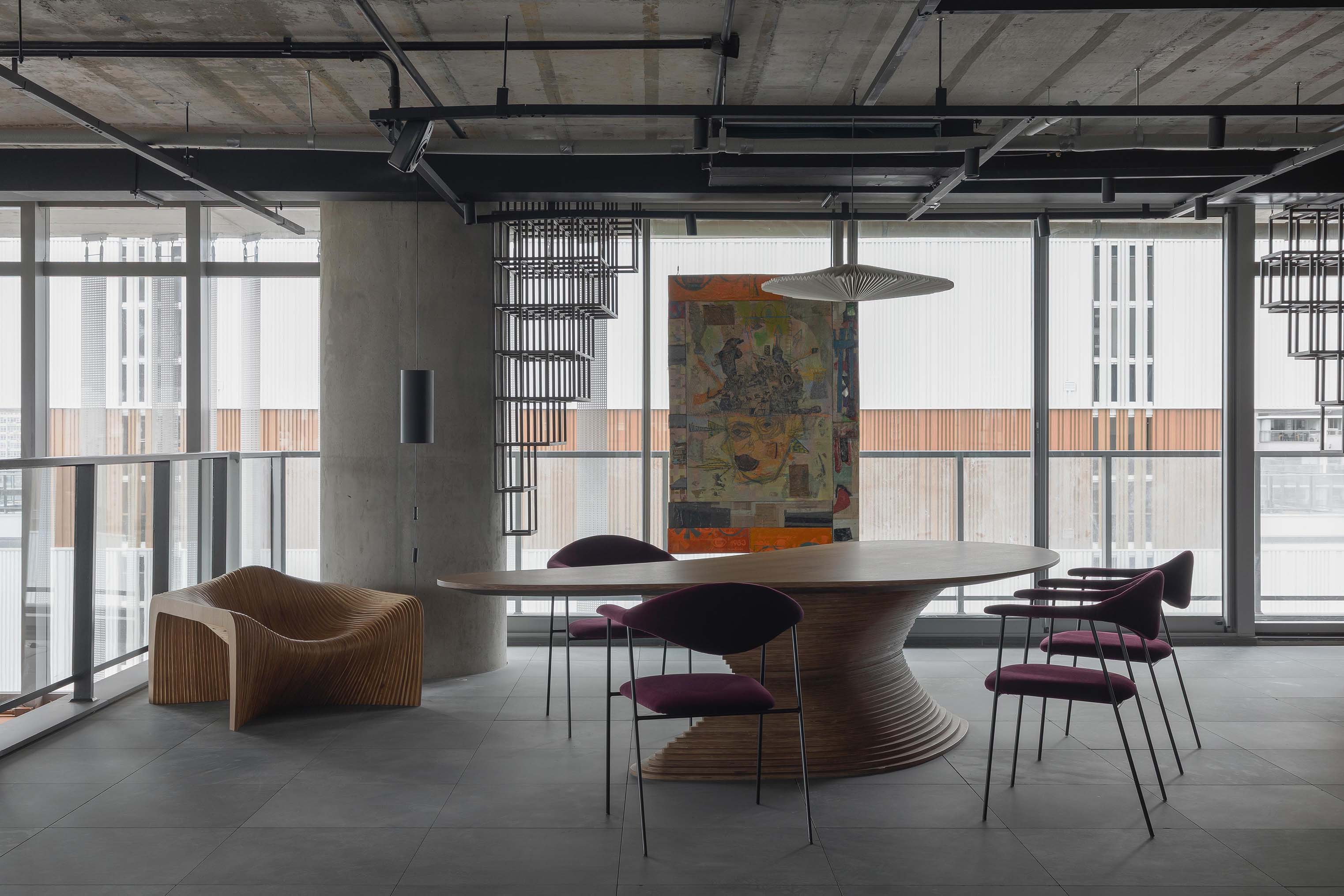
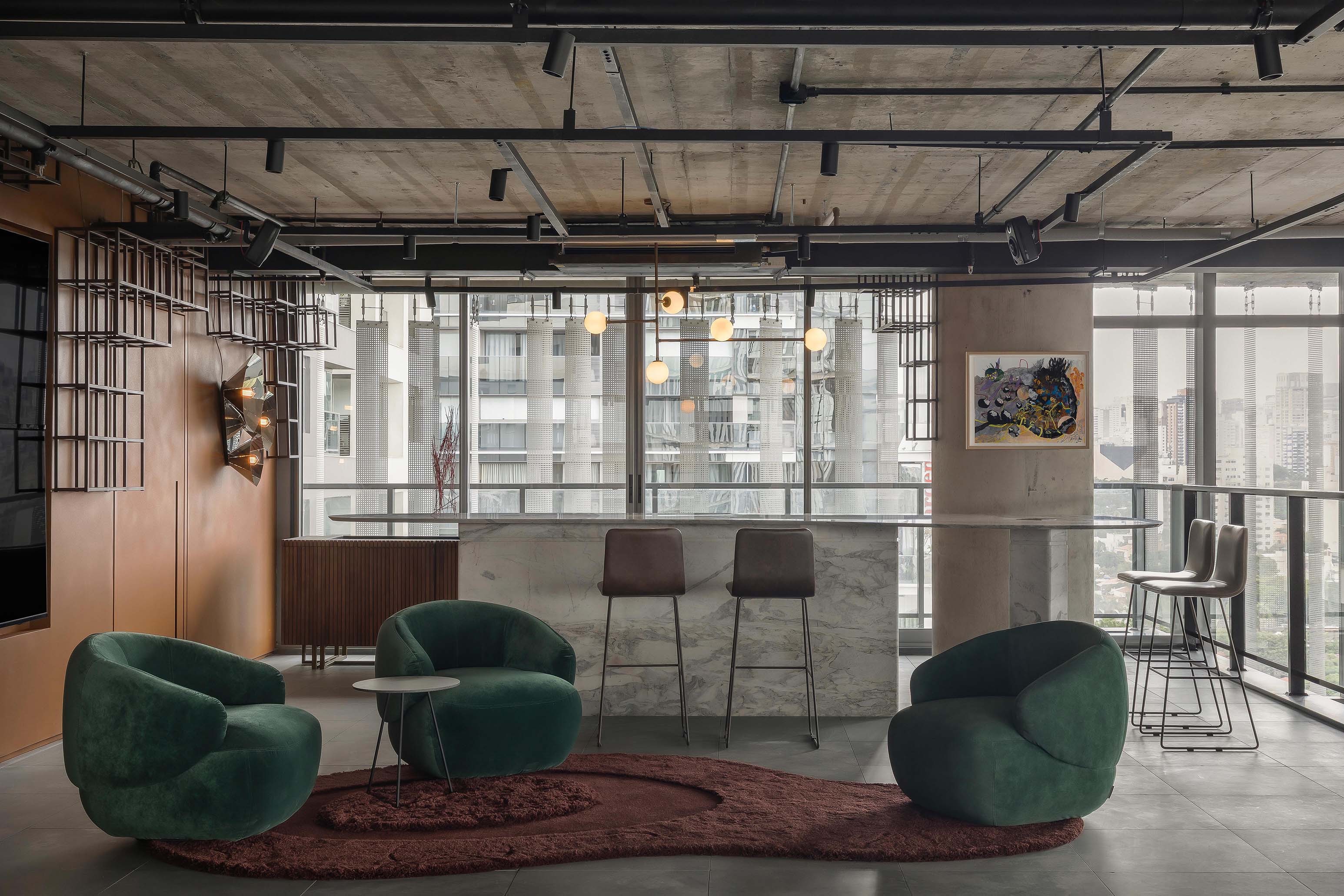
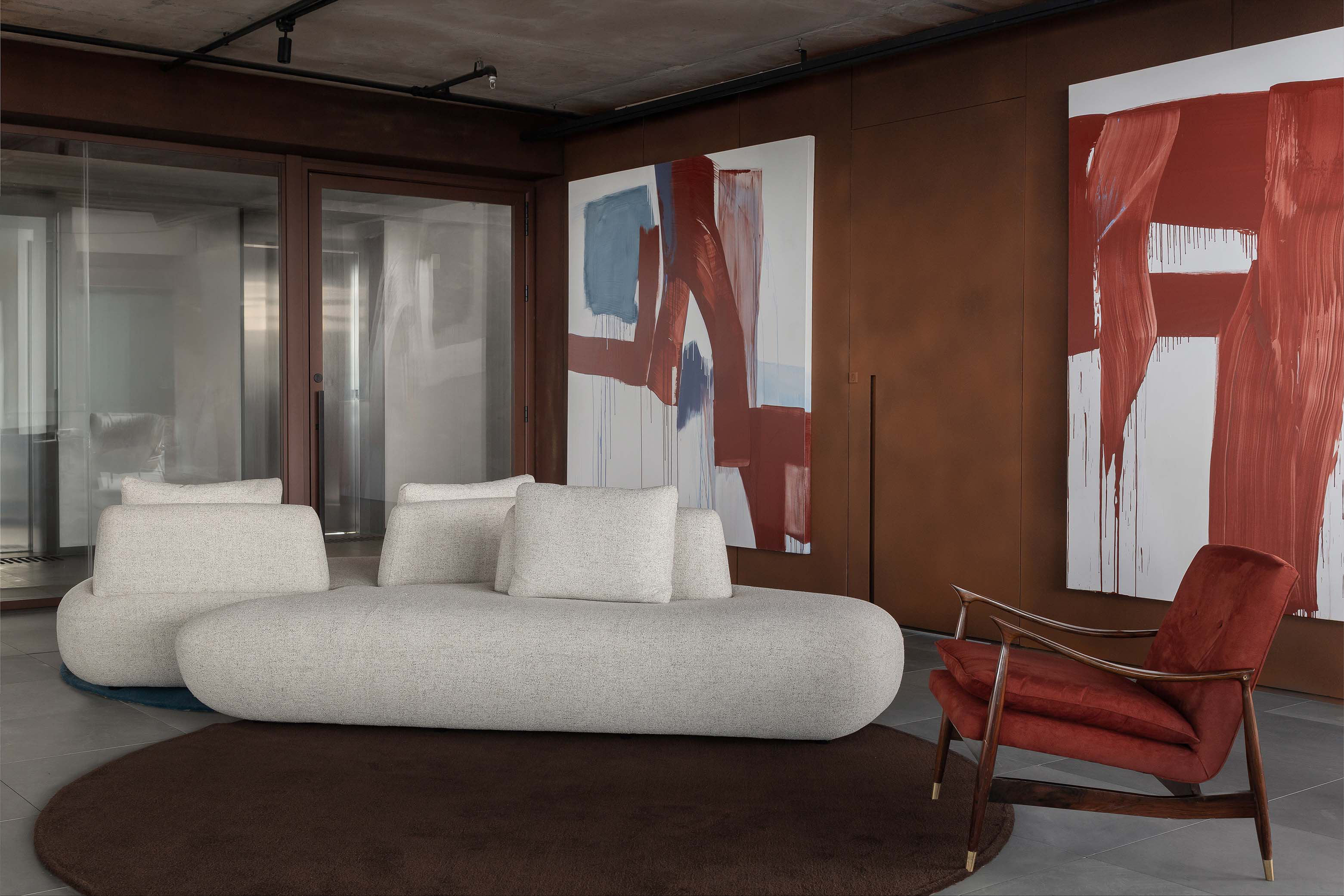
This project transforms a traditional law firm into a regenerative, people-centered workspace. By relocating to a LEED-certified building, the design prioritizes circularity, well-being, and connection to the city. 100% of furniture, fixtures, and architectural elements were reused from the former office. Open layouts, passive climate strategies, solar panels, and water harvesting systems deliver environmental and social impact. It’s a flexible, collaborative, and cultural hub—far beyond a typical corporate space.
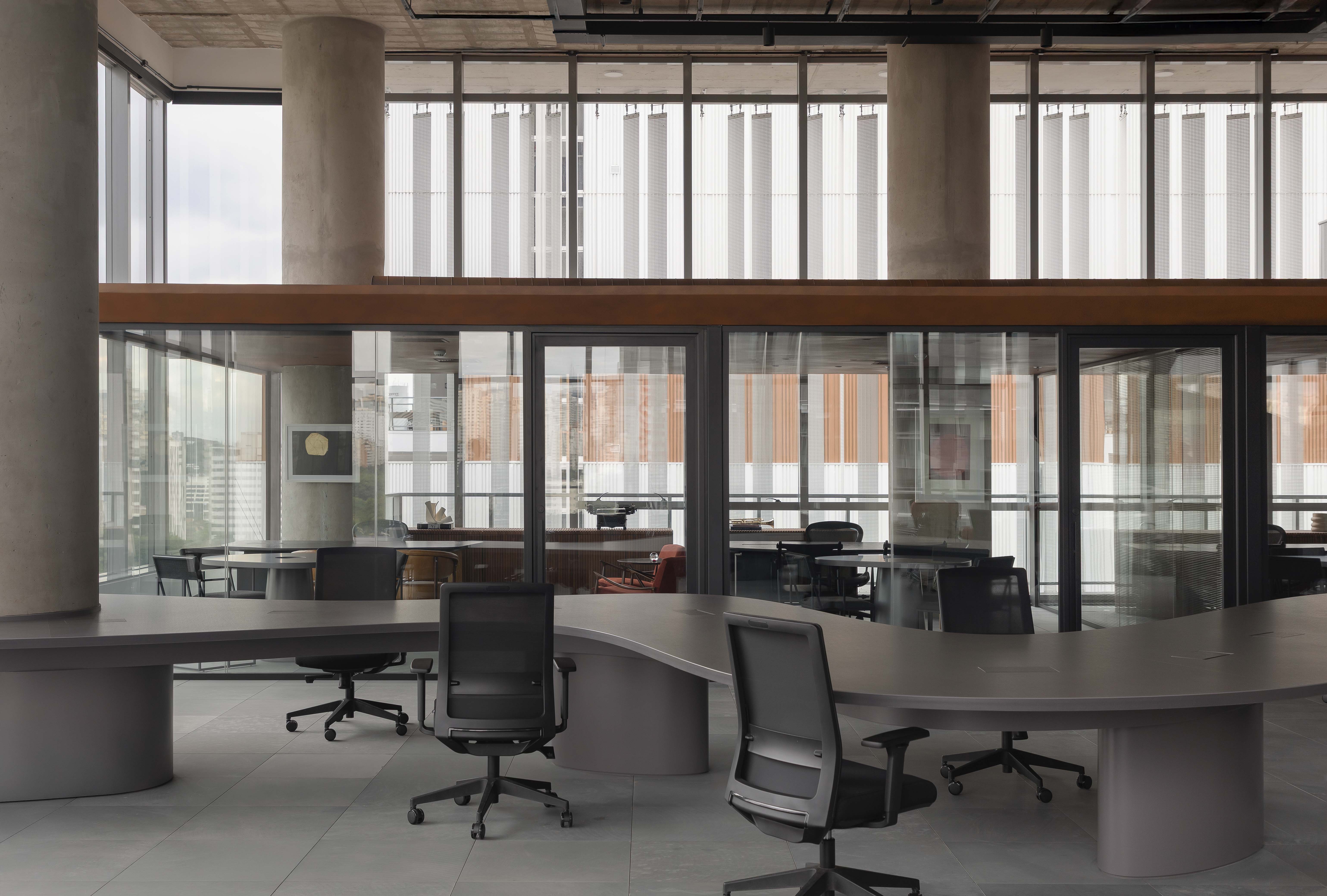
The goal was to redefine what a law office could be—human-centered, flexible, and environmentally responsible. Driven by circular design, the project reuses every component from the previous office, nearly doubling the space with minimal new resources. It shifts from a closed, rigid workplace to an open, community-oriented hub that fosters collaboration, well-being, and cultural interaction while reducing carbon impact.
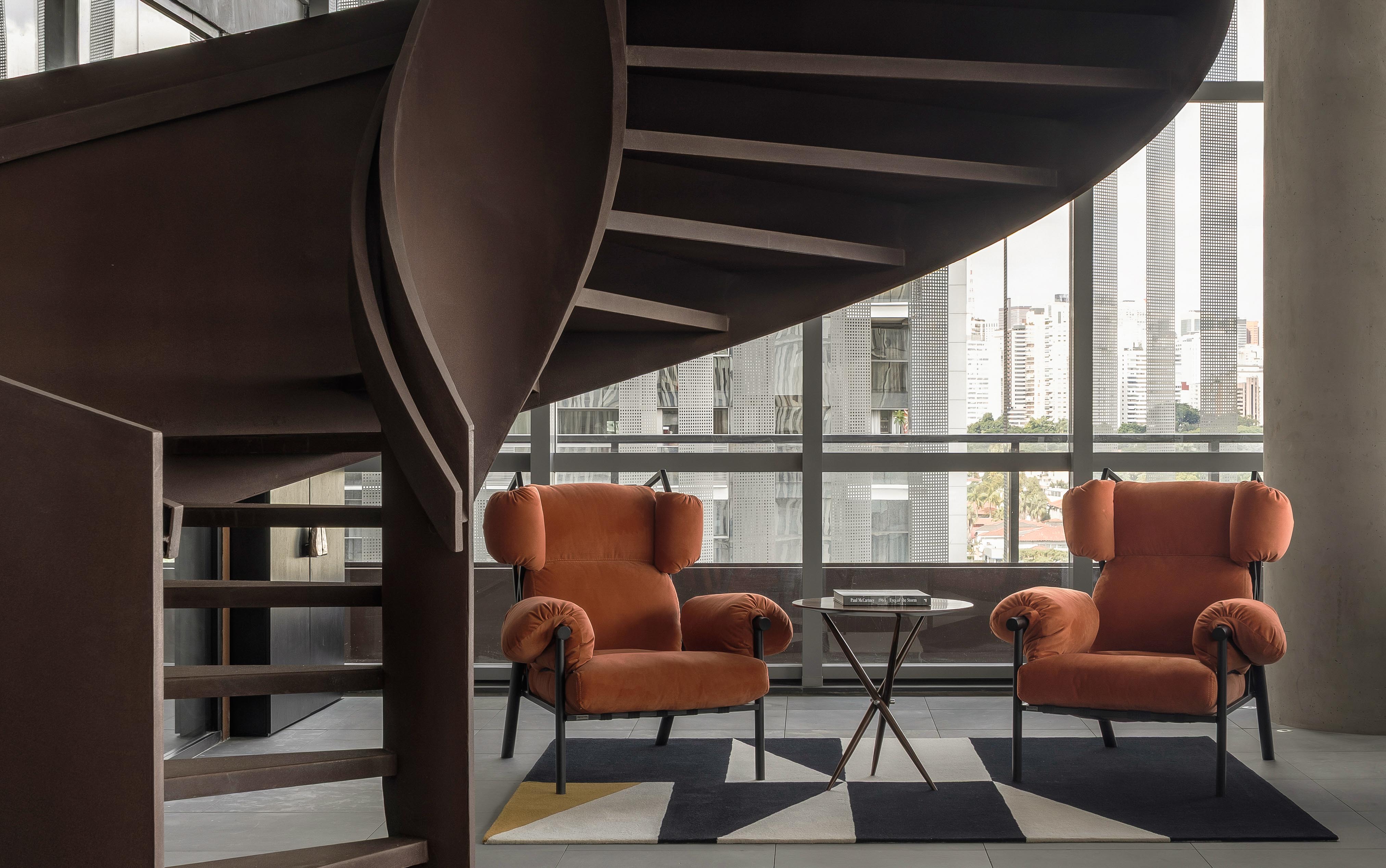
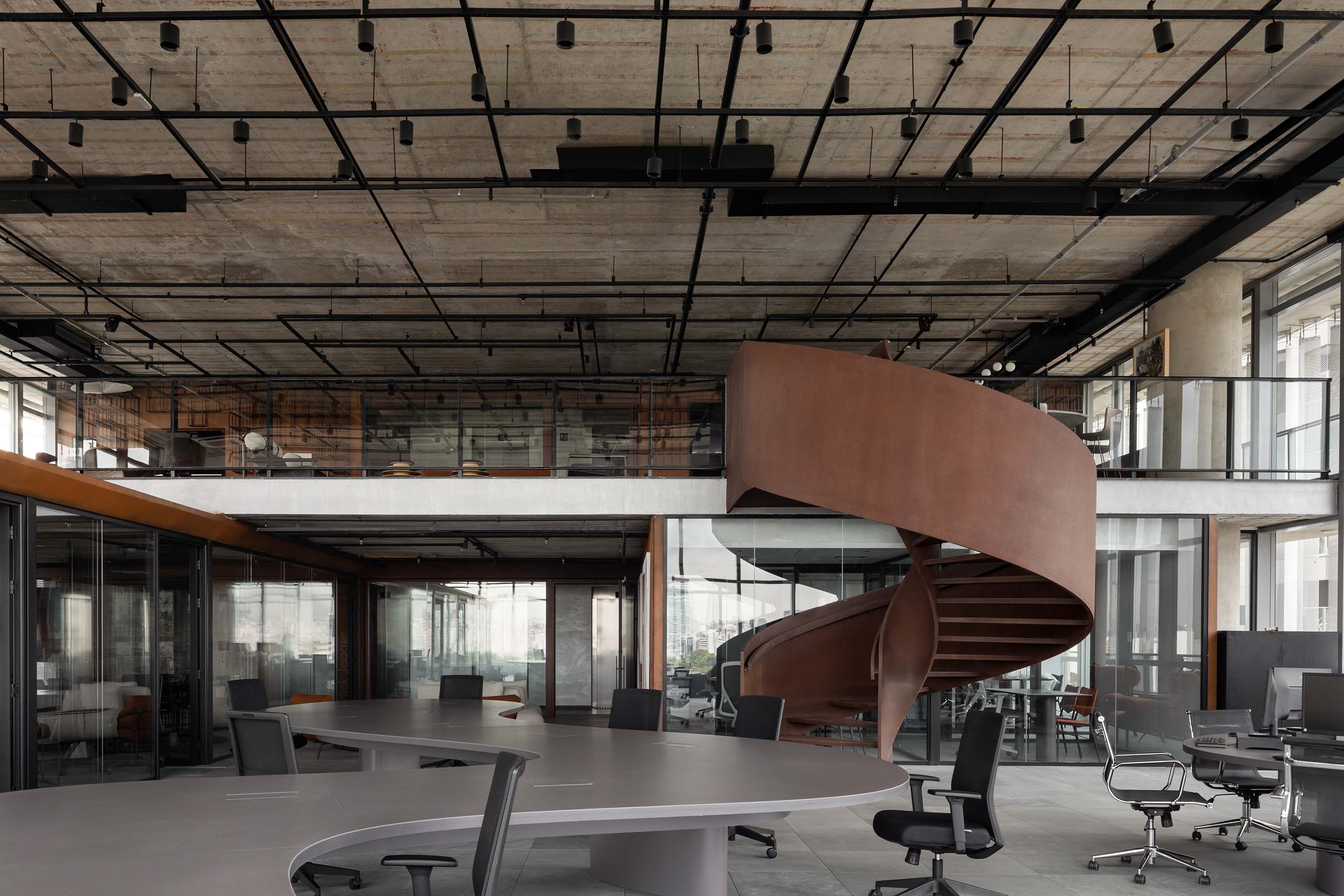
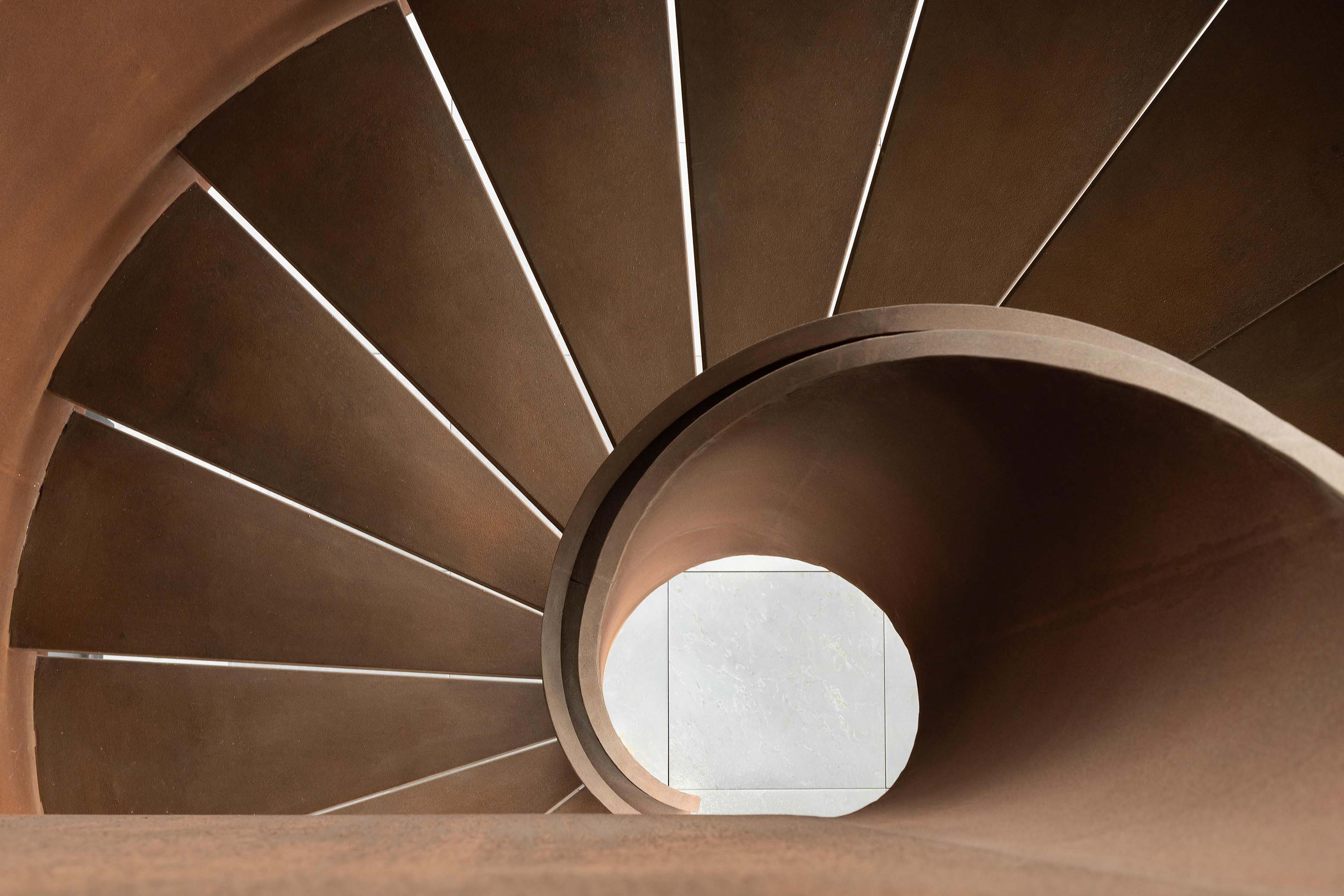
The form is dictated by function, circularity, and honesty in materials. Structural elements remain exposed—pillars, slabs, and raw raised flooring—eliminating unnecessary finishes. A corten steel staircase acts as the sculptural core, modular and fully reusable. A large freestanding volume holds confidential spaces while the rest remains open and fluid. Industrial textures, recycled materials, and natural light create an immersive, transparent, and dynamic environment.
The workspace functions as a hybrid environment: part office, part cultural hub, part coworking. Open, flexible layouts support both solo work and collaborative meetings. The upper lounge—designed like a hotel lobby—hosts events, exhibitions, music sessions, and informal gatherings. Ventilation, natural light, and movable furniture reduce energy use and allow the space to adapt constantly to the team’s evolving needs.
The project radically departs from traditional law office models. It champions circularity by fully reusing furniture, architectural features, and even iconic design elements like the metal grid from the previous office. Its flexible, hospitality-inspired approach integrates work, culture, and community. Solar panels, water harvesting, and minimal material use lower its footprint, making it a scalable model for regenerative corporate design.
Credits
Entrant
Smith Farms Custom Furniture
Category
Furniture Design - Tables & Desks
Entrant
National Museum of History
Category
Product Design - Museum Education