2025 Winner
UO Community Cafe
Entrant
Wanfang Long
Category
Interior Design - Civic / Public
Client's Name
UO - A Non-profit Organization
Country / Region
United States
Gallery
About The Entry
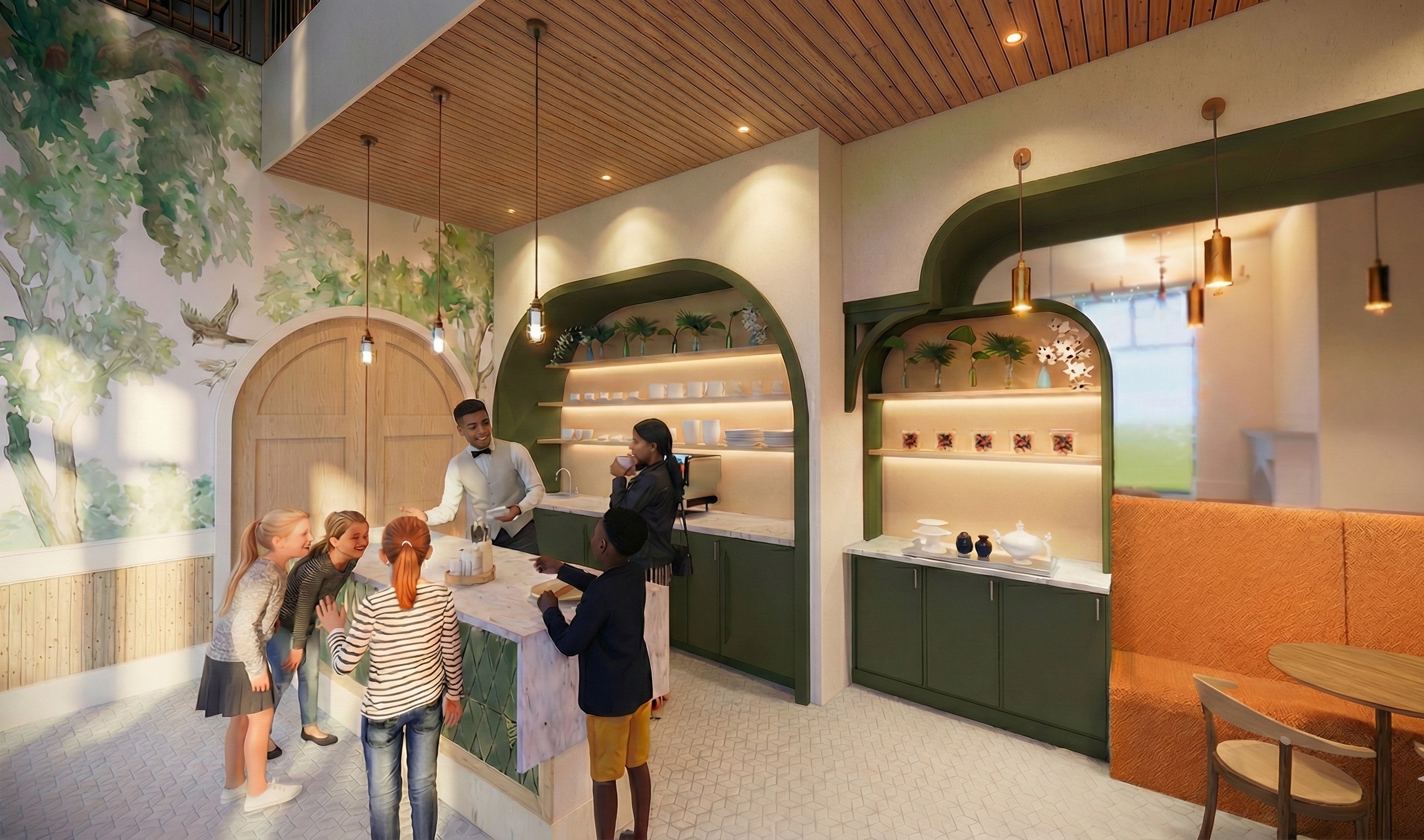
The project is located in Baltimore, Maryland—an area historically affected by urban blight, including drug activity and homelessness. In response, the nonprofit organization UO envisions revitalizing the community by creating an inviting public space that encourages social engagement, supports local economies, and fosters a healthier living environment. Their mission is rooted in a simple belief: everyone deserves access to a vibrant community and to fresh, organic food.
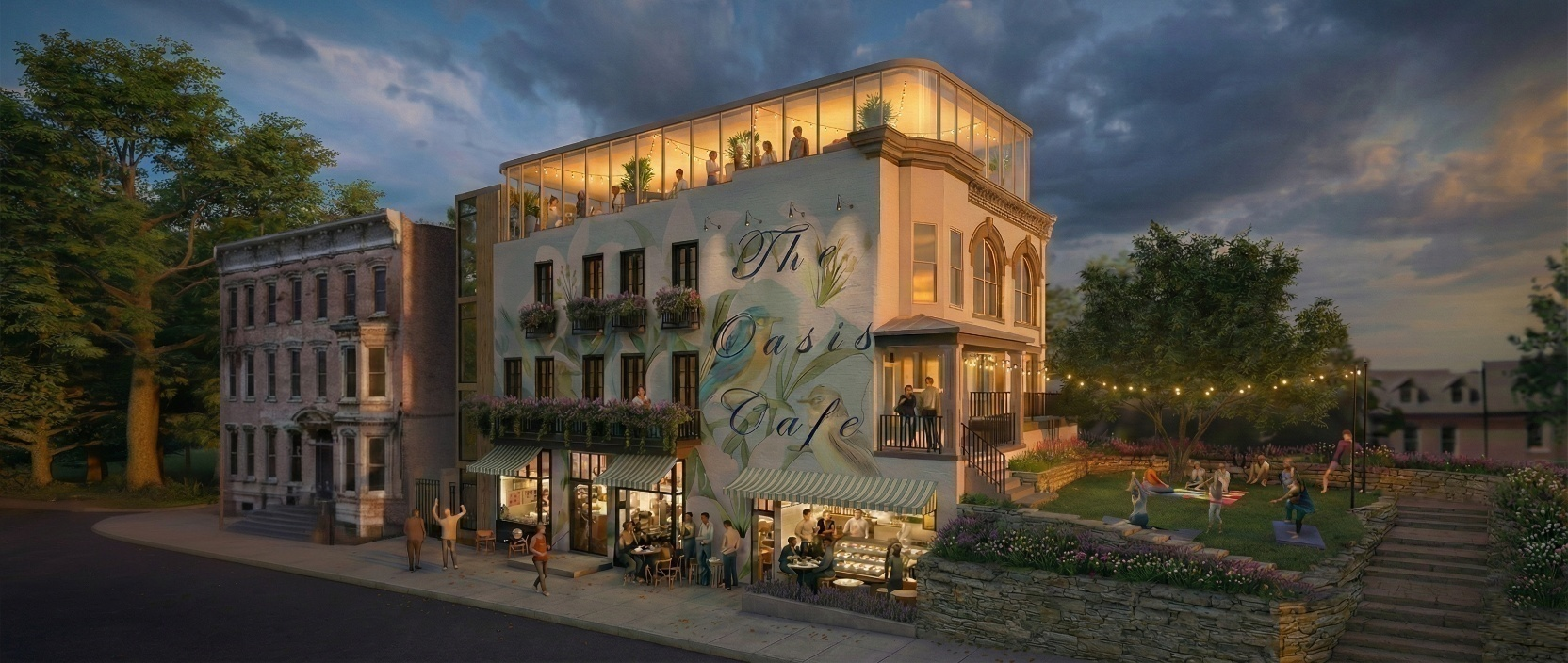
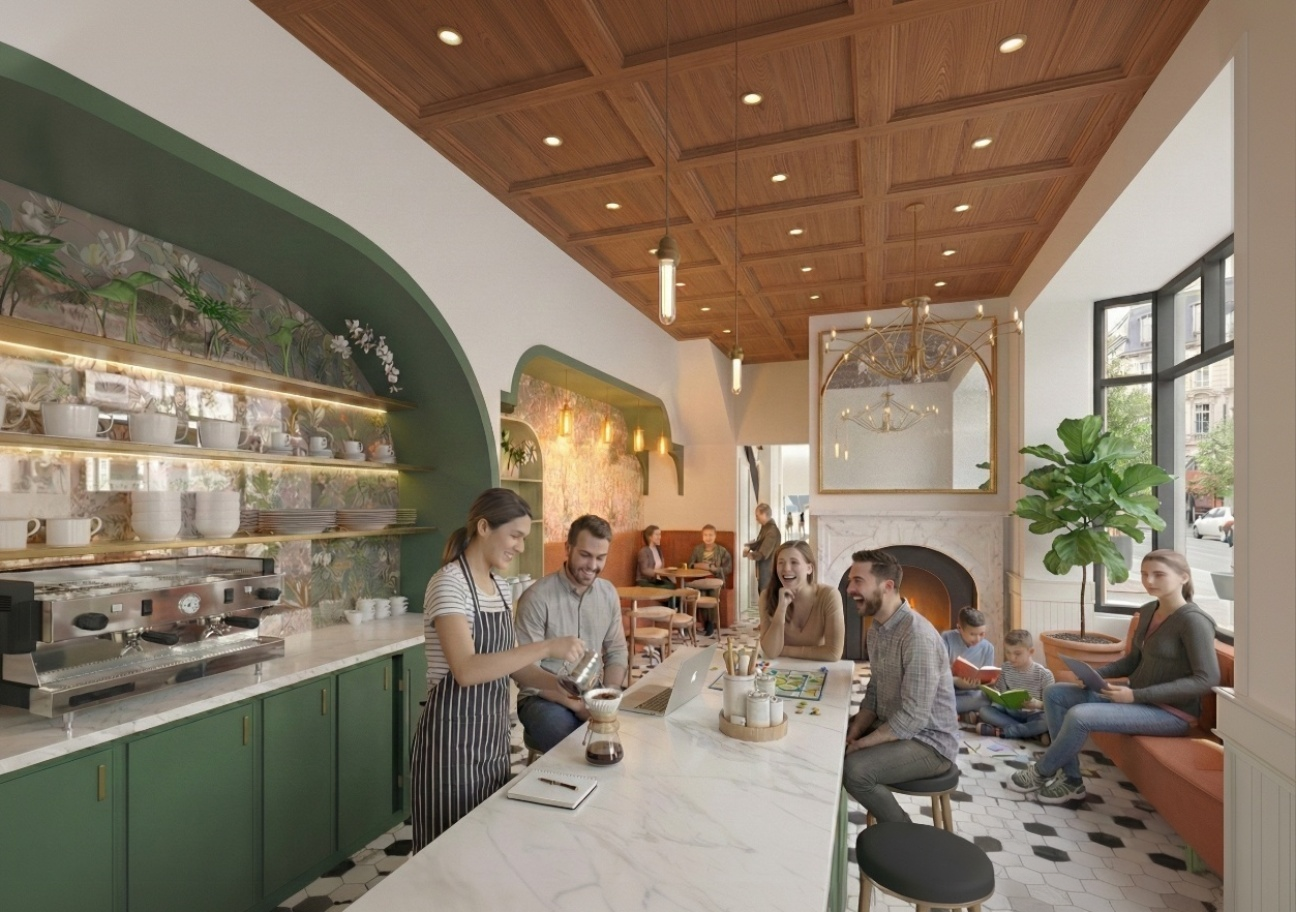
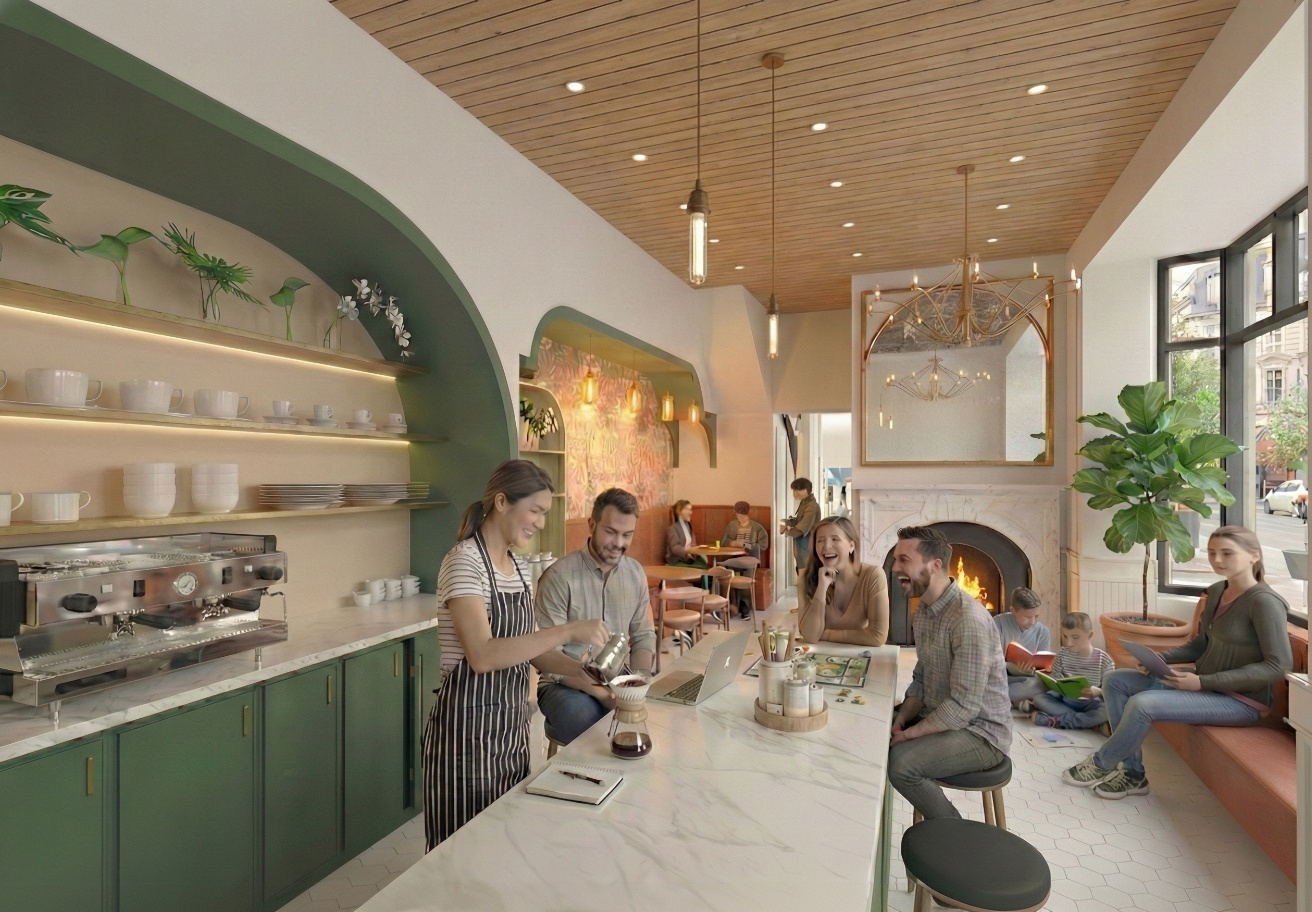
The proposal renovates a deteriorated rowhouse and transforms it into a community anchor. The ground floor accommodates a pop-up style café serving locally sourced food, ensuring that the money spent by residents circulates back into their own neighborhood. The first floor additionally provides flexible space for cooking classes and wine-tasting workshops, equipping residents with useful culinary skills.
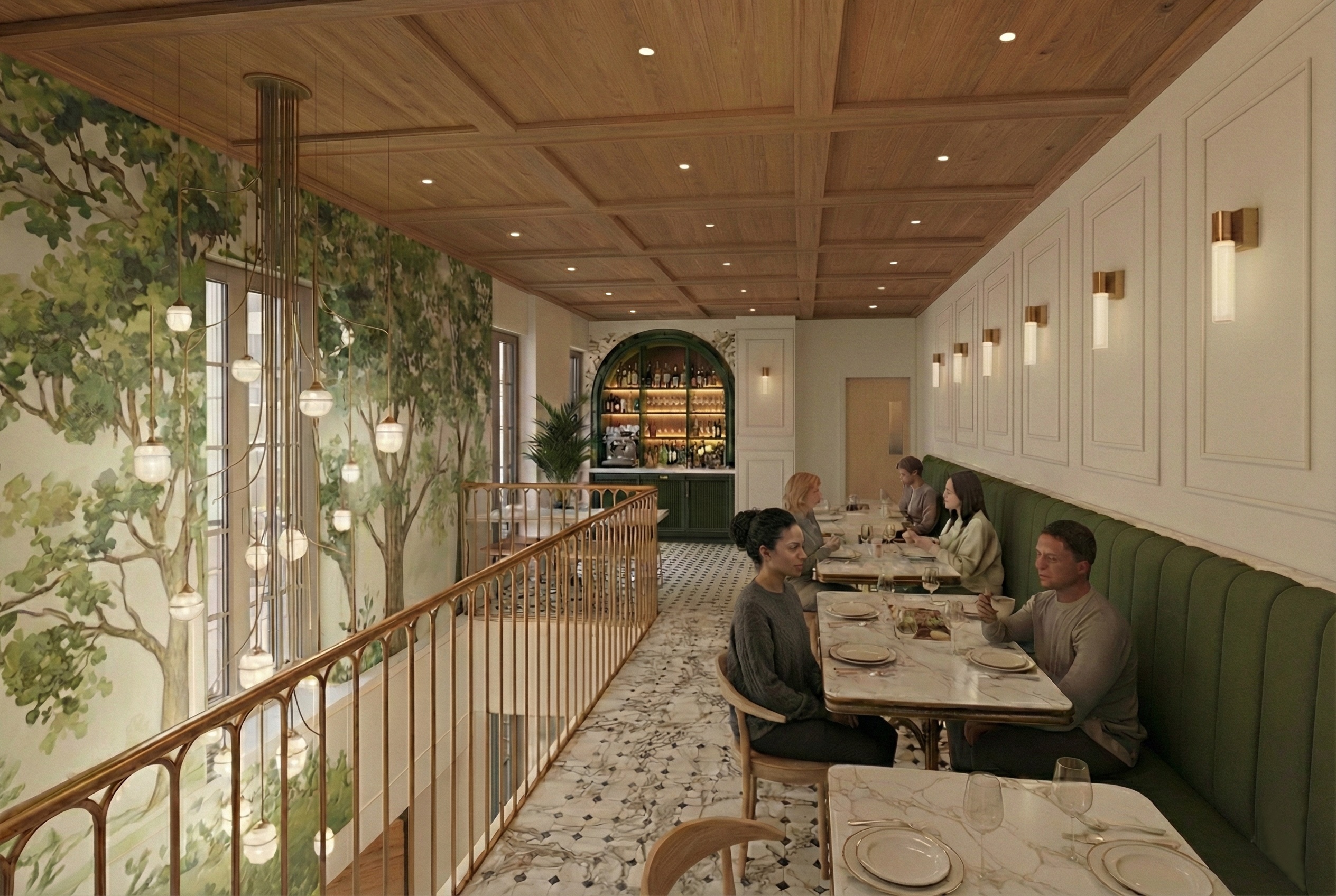
A mezzanine level offers an intimate dining area overlooking the café. Central to the spatial experience is a vertical atrium that brings fluidity and light into the building, creating a strong visual and aural connection between the levels. A handcrafted chandelier delicately descends through the atrium, linking both floors with a soft vertical gesture.
The third floor includes a community room and a maker space where residents can gather to create crafts, artworks, and other projects. Above it, a new greenhouse level provides space for growing organic produce year-round, reinforcing nourishment and self-sustainability. The roof integrates solar panels and a rainwater collection system, reinforcing the project’s sustainable mission and reducing environmental impact.
Inspired by the biblical verse, “Behold the fowls of the air… yet your heavenly Father feedeth them. Are you not much better than they?” the façade features a mural of sparrows and lilies painted by local artists. This artwork not only beautifies the street but also reflects a message of care, provision, and hope— offering both a symbolic and visual gift back to the community.
The architectural renovation prioritizes sustainability by using locally sourced materials and retaining the structure of the rowhouse.
By salvaging a neglected rowhouse and reimagining it as a hub for food, culture, and sustainability, the project stands as a beacon of hope and a model for community-driven urban revitalization.
Credits
Entrant
Freelance
Category
Product Design - Digital & Electronic Devices
Entrant
Luciano Dalla Marta Architecture
Category
Interior Design - Event Space
Entrant
LOYU Interior Design Engineering CO., LTD.
Category
Interior Design - Residential